
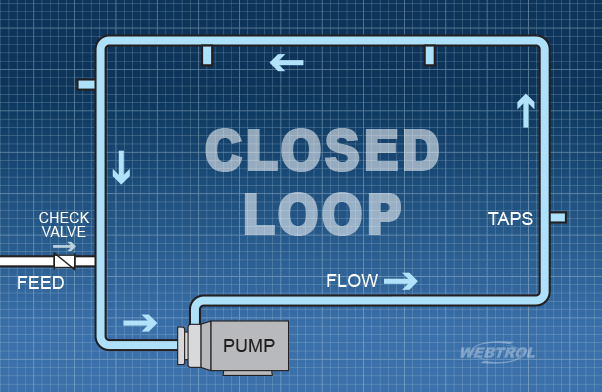
Pumping within a closed loop is often mis-sized due to the nature of the closed loop. By closed loop, we mean that the end of a pump system is plumbed back into the suction of the pump and is circulated back through the system.
Taps within the system for usage such as lab use or rinsing functions are made up from an outside source such as a pump from a treatment unit or an existing water system. In most of these systems, water is required to move at a minimum velocity to preserve freshness and no contamination for piping materials.
When sizing the pump, flow is determined by the rate which will maintain the given velocity. This is obtained by calculation or from piping friction loss charts that have a column for flow rate at a given velocity based on the pipe ID (inside diameter of the pipe). Adding the minimum flow to the maximum possible flow from any taps in the loop will yield the flow rate required by the pump.
Determining the TDH required by the pump is a matter of calculating the piping losses throughout the loop (pipe friction). The pump cannot build any extra pressure than to overcome the friction in the piping. The loop pressure is controlled by the source water. So, if more pressure is needed, it will need to be added by the source feed before the loop.
The pump in the loop is only to circulate the fluid. Many times, an assumption is made that the loop pump can increase the pressure throughout the loop. While pressure can be higher near the pump end of the loop than at the end, this is due to the piping loss being spread evenly throughout the loop.
Pumping in the closed loop comes down to some basics.
- First, determine how the outside source will provide the required loop pressure.
- Determine the flow that will provide the proper velocity during peak usage of all taps.
- Finally, determine the piping losses through the pipe and fittings. This will then be the required TDH.
You may then choose your pump based on these conditions. Webtrol’s qualified Customer Service Department or Sales Staff can assist you in this process.