
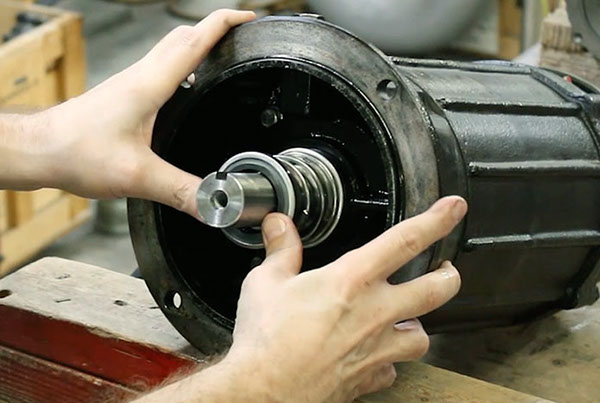
Replacing Mechanical Seals on Pumps
It is not unusual for mechanical seals to fail. Many times mechanical seals are the first components to fail in a pumping system. They are a common cause of downtime and are responsible for time-consuming pump repairs. Mechanical seals themselves can fail due to lack of lubrication, temperature fluctuations, contamination, or simply wear and tear. However, the failure can also
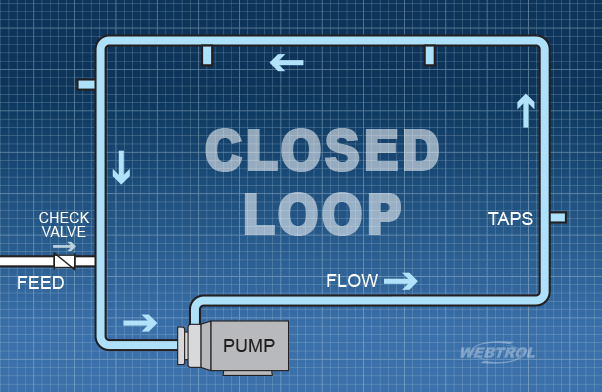
Sizing a Pump for a Closed Loop System
Pumping within a closed loop is often mis-sized due to the nature of the closed loop. By closed loop, we mean that the end of a pump system is plumbed back into the suction of the pump and is circulated back through the system. Taps within the system for usage such as lab use or rinsing functions are made up
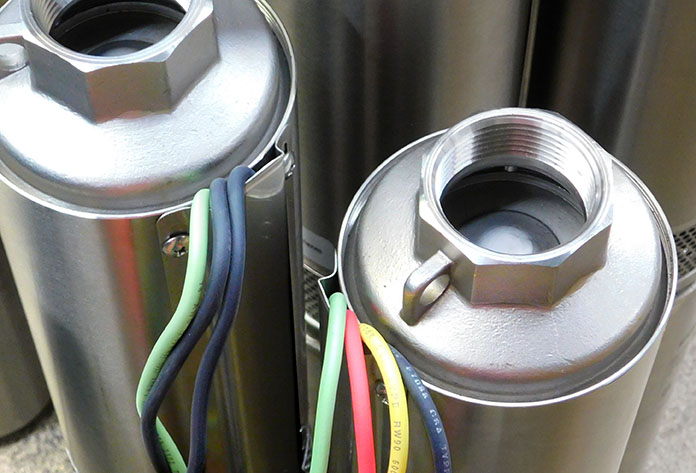
2-Wire vs. 3-Wire Type Submersible Motors
The water well industry often debates the preferences and features of a single-phase 2-wire motor vs. a single-phase 3-wire motor to operate their submersible pumps. While some features differ significantly, many of the basics are the same. These motors are better characterized by their general motor type. 3-wire submersible motors are of two basic types: Capacitor Start – Induction Run
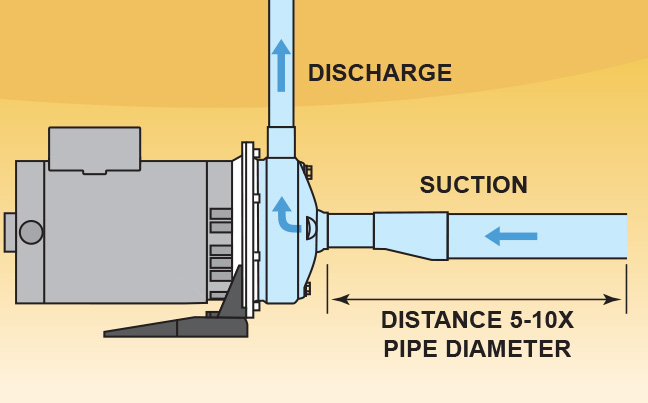
Piping for the Suction Side of the Pump
When piping the suction side of a centrifugal pump, it is not always best practice to adapt to the size of the suction and continue back to the source. In choosing pipe size, consider a larger pipe diameter than the suction connection, particularly if the source is not near the pump. A larger diameter suction line will reduce piping losses.
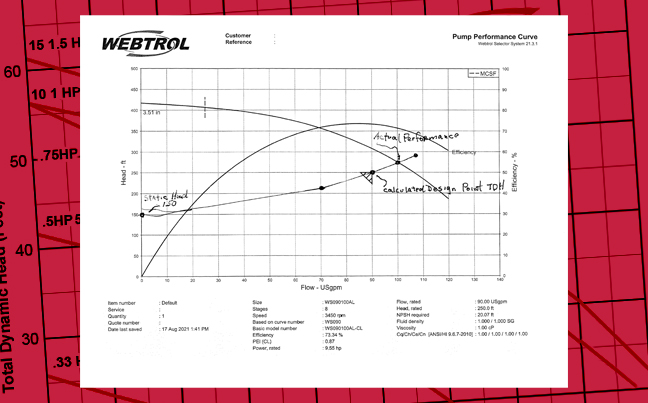
Create a System Curve BEFORE Choosing a Pump
Choosing a pump by creating a system curve first will ensure the pump you choose will operate properly and within the preferred operating range for that pump. Creating the system curve uses the basic steps in creating TDH for various flows. By plotting several points on a pump curve, you can see what the pump performance will be under the
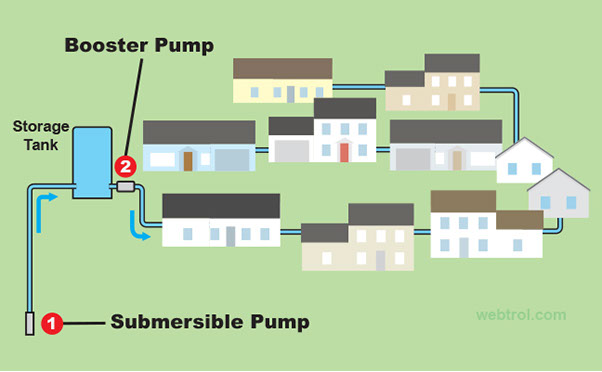
Booster Pump Design for Well Applications
One of the most efficient ways to supply water to small housing developments that do not have public water supply available is to use two pumps. First, provide a well to pump to ground storage, then use a second pump to boost pressure to the desired system pressure. The advantages of a lower producing well, along with pumping against only
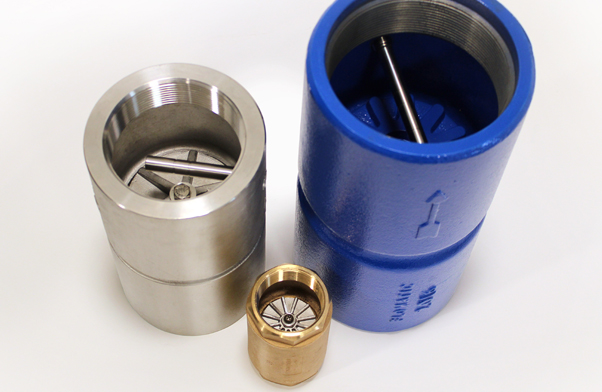
Check Valve Practices for Submersible Pump Systems
Check valves play an important role in controlling the flow of fluids in a pumping application, but a water well application depends on check valves even more. Backflow prevention is the most common use of check valves, particularly in a system that is pressurized by a pump. Controlling backflow is critical in a well application for several more reasons. Many
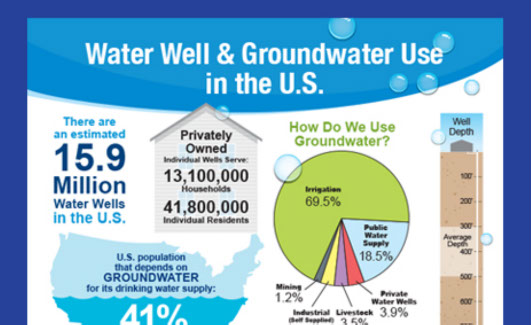
Water Well & Groundwater Use in the U.S.
(Click on image to see full infographic) Sometimes we take water usage for granted. Where does it come from? Where do we use it? How do we use it? An estimated 41% of the U.S. population depends on groundwater for its drinking water supply, not surface water. Did you know that turning the faucet off while brushing your teeth can
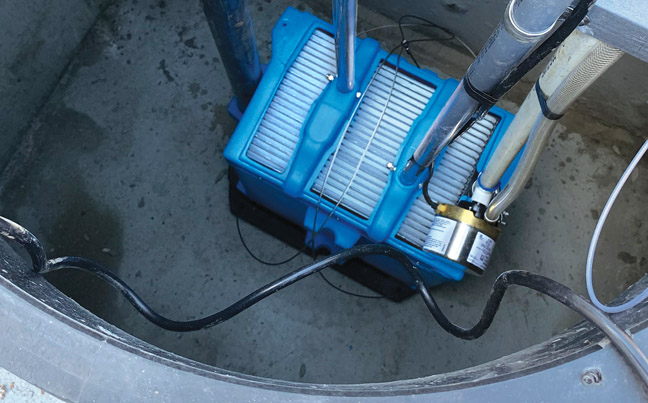
Water Reuse to Save Veteran’s Administration Clinic 90,000 Gallons of Water per Year
A new Veteran’s Administration Clinic in Sedalia, Mo, wanted to reuse water as part of the clinic’s plan to attain LEED Certification under the United States Green Building Council. Their desire was to collect wastewater from showers and lavatories, treat it to a quality suitable for reuse, and put it back into a separate water system furnishing flush valves in