
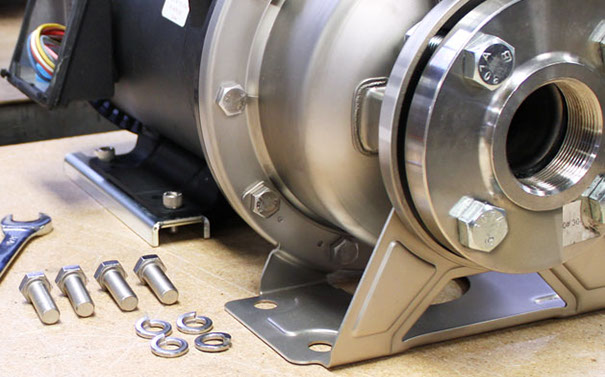
Choosing Stainless Steel Components for Pumps
The advantages of using stainless steel are obvious in pump manufacturing. Stainless steel is strong, corrosion resistant, has great hot strength, and is low maintenance. This makes it the perfect material for both surface and submersible pumps. Stainless steel, made up principally of iron and carbon, is a steel alloy containing many elements. Chromium is added to make it resistant
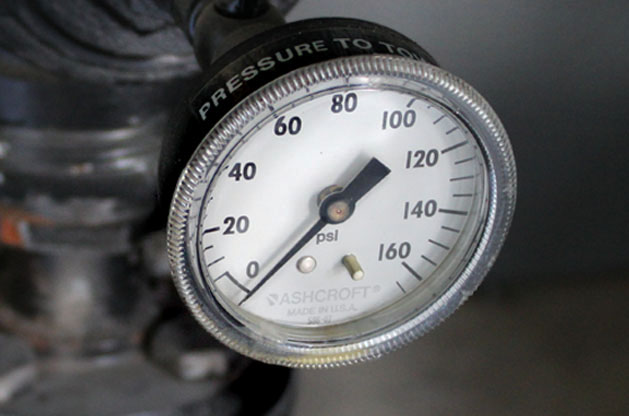
Booster Pumps & Boosting Water Pressure
Booster pumps increase water pressure and/or flow rate in a water system. These pumps, through the use of centrifugal force, boost water pressure when the existing pressure is not sufficient. Pressure boosting is determined by the existing conditions and the demand pressure. The desired pressure above the existing, and the amount on flow necessary, are the key factors. For instance,
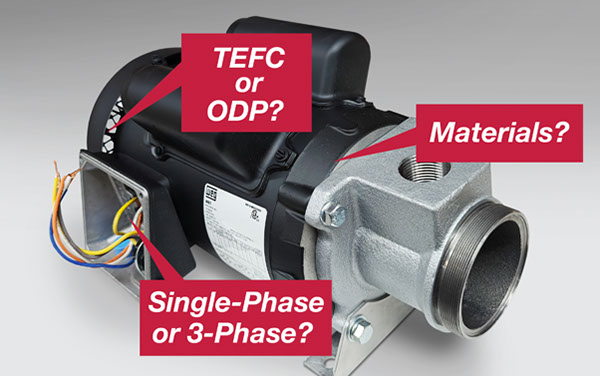
What to Know BEFORE Ordering a Pump Motor
Configuring the right pump with the right motor is critical. Using the wrong assumptions could result in ordering the wrong pump for its intended purpose. At a minimum, ordering the wrong pump and motor configuration will result in downtime due to reordering, additional deliveries, and a little embarrassment for not doing it right the first time. On the other hand,
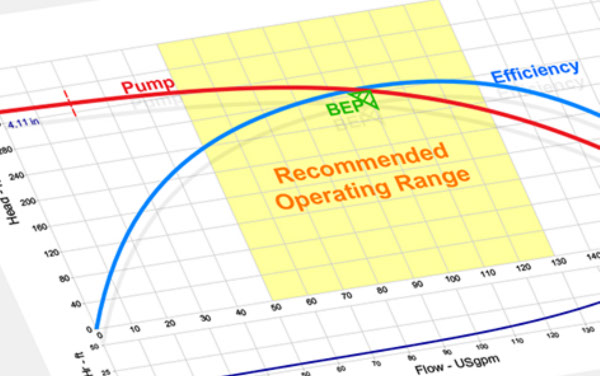
Low Flow or No Flow Pump Conditions
Centrifugal pumps are designed to move a volume of water while creating differential pressure from the pump suction to the discharge. The pump has a flow range designated on paper from no flow to the maximum flow. However, the curve does not indicate that the pump can or should be used at any condition on the curve. Centrifugal pumps all

When the Pressure Gauge is Not Telling the Whole Story
The plant maintenance supervisor or the water system manager is diagnosing a pump system to ensure everything is operating properly. He notices an apparent loss of production, which could be a sign of wear. He knows the pump performance data and he is familiar with piping losses, so he knows what his gauge should read downstream near his point of
VFDs: More Than Constant Pressure!
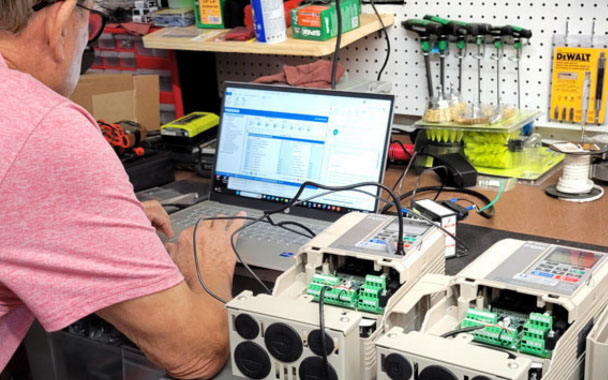
Many of us hear the term VFD and automatically think of “constant pressure device”. But the reality is constant pressure is just one benefit available through use of a VFD (Variable Frequency Drive) in a water supply system. By using a pressure sensor, a VFD can sense pressure and change speed by adjusting the frequency of the power supply, varying
Understanding Pump Motor Nameplates
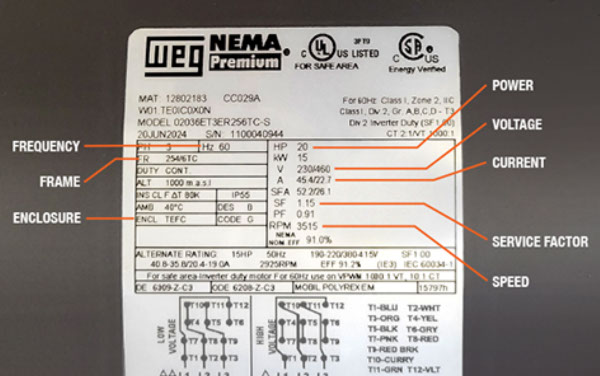
All pump motors have a nameplate, or a permanent adhesive label, that carries critical data about that specific motor. Deciphering that information is vital when specifying a motor to match a pump. A common language is used on nameplates to avoid confusion and help make motors interchangeable between manufacturers. This makes installation, repair, or replacement a safer and more effective
Cavitation is Possible in Water Well Applications
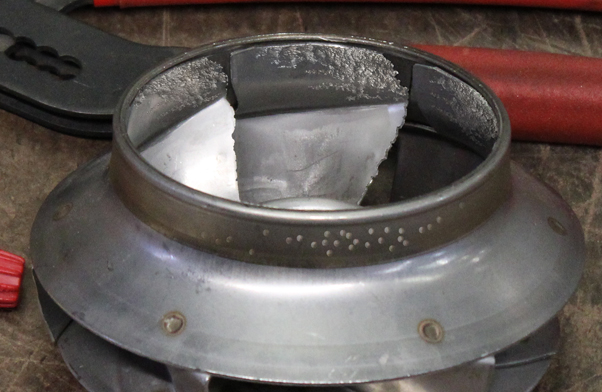
In most basic submersible water well pump training for pump sizing, preventing cavitation is rarely prioritized. Most basic manuals do not even mention it. While the cavitation seen in many other types of pumping systems also occurs in water well applications, it is usually only discussed in commercial applications. Residential water wells usually are low flow and have sufficient submergence
What to Consider in a Packaged Pump Skid System
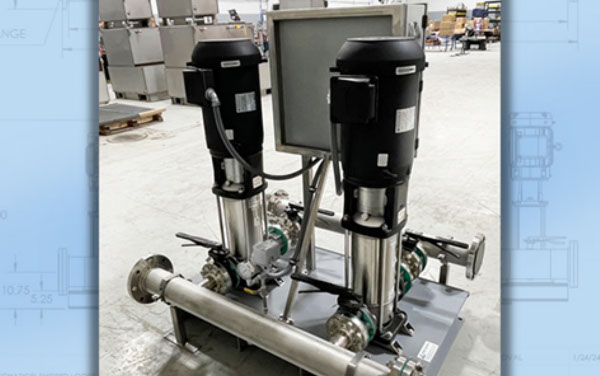
Packaged pump skid systems are an increasingly popular solution for industrial water handling. They are customized to match your unique pumping requirements and fit into your available space. Modular skid systems are built off-site where the components are fabricated and fitted onto the frame. The entire pump system – pump(s), motor, piping, valves, control panel – are assembled onto a